
Ocean Animals Coloring Pages: Sharks, Dolphins & Turtles (Easy & Detailed)
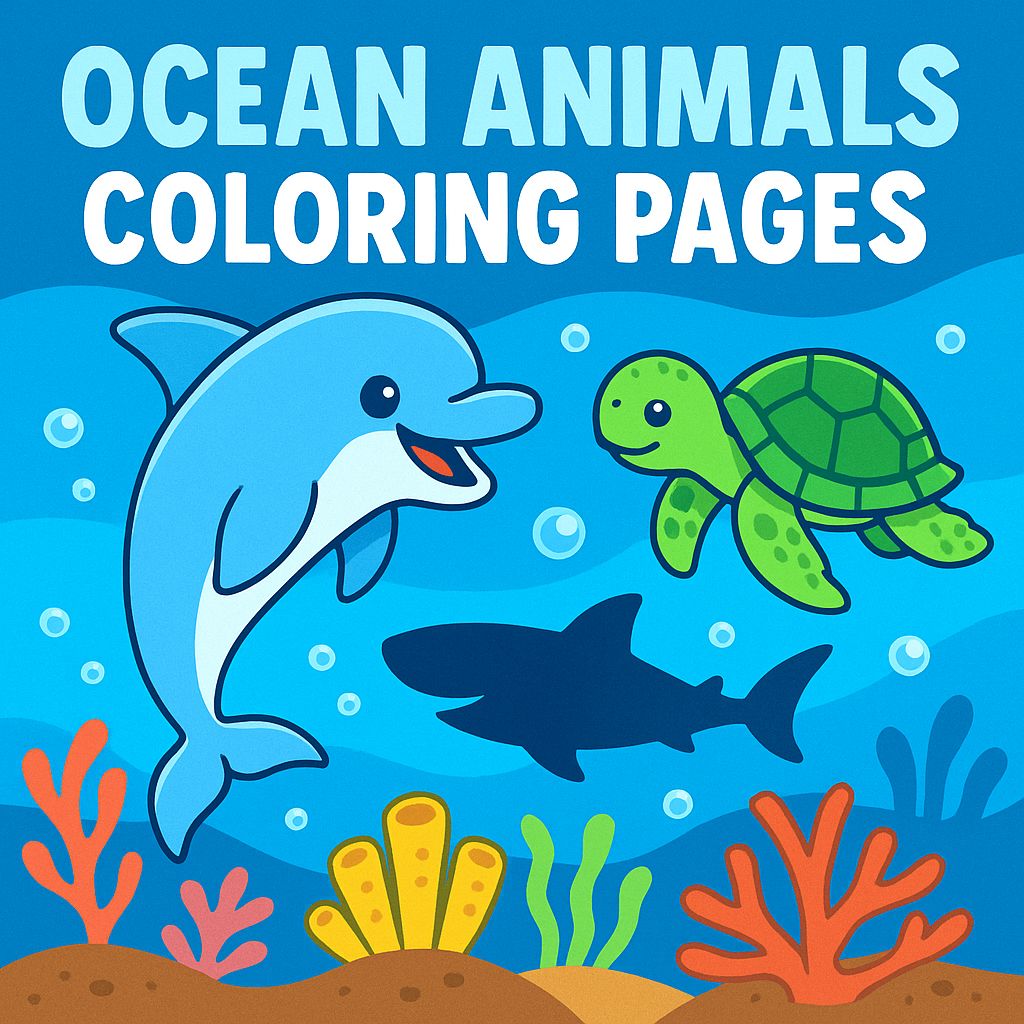
Grab those blues and sea greens—today we’re diving deep! Whether your little artist loves friendly dolphins, majestic sea turtles, or toothy sharks, this guide to ocean animals coloring pages has something for every age and skill level. We’ll show you quick wins for toddlers, detailed ideas for big kids and grown‑ups, and clever tricks for watery effects that make your pages look splash‑tacular. 🌊
TL;DR
Easy pages = big shapes (smiley dolphins, chunky turtles). Detailed pages = scales, barnacles, coral textures, and motion lines. Use light-to-dark blues for water, and leave thin white lines for shiny highlights on fins and shells. Start with our Sea Animals set, then explore focused collections like Sea Turtles and Fish.
Table of Contents
- Easy vs. Detailed: Picking the Right Pages
- Popular Themes: Reefs, Sharks, Dolphins & Turtles
- 10-Minute Quick Wins
- Skill Builders & Ocean STEM Sparks
- Ocean Color Combos & Water Effects
- Materials & Printing Tips
- Host an Undersea Coloring Party
- FAQ
Easy vs. Detailed: Picking the Right Pages
Easy (Ages 3–6)
Choose bold outlines and large spaces that are forgiving for little hands—think smiling dolphins, simple fish, and turtles with big friendly eyes. For a variety pack that’s perfect for starting out, swim over to our Sea Animals collection.
- One or two fins/flippers, minimal detail
- Clear shapes and lots of open space
- Fun extras: bubbles, starfish, seashells
Detailed (Ages 7+ & Adults)
Go for pages with scales, shell segments, coral textures, and dynamic poses (leaping dolphins, swimming turtles, prowling sharks). Want a meditative challenge? Try the patterned shells in our Sea Turtles or the layered fins in Fish.
- Fine linework for scales and ridges
- Room for gradients, reflections & bubbles
- Background scenes like coral reefs & kelp forests
Popular Themes: Reefs, Sharks, Dolphins & Turtles
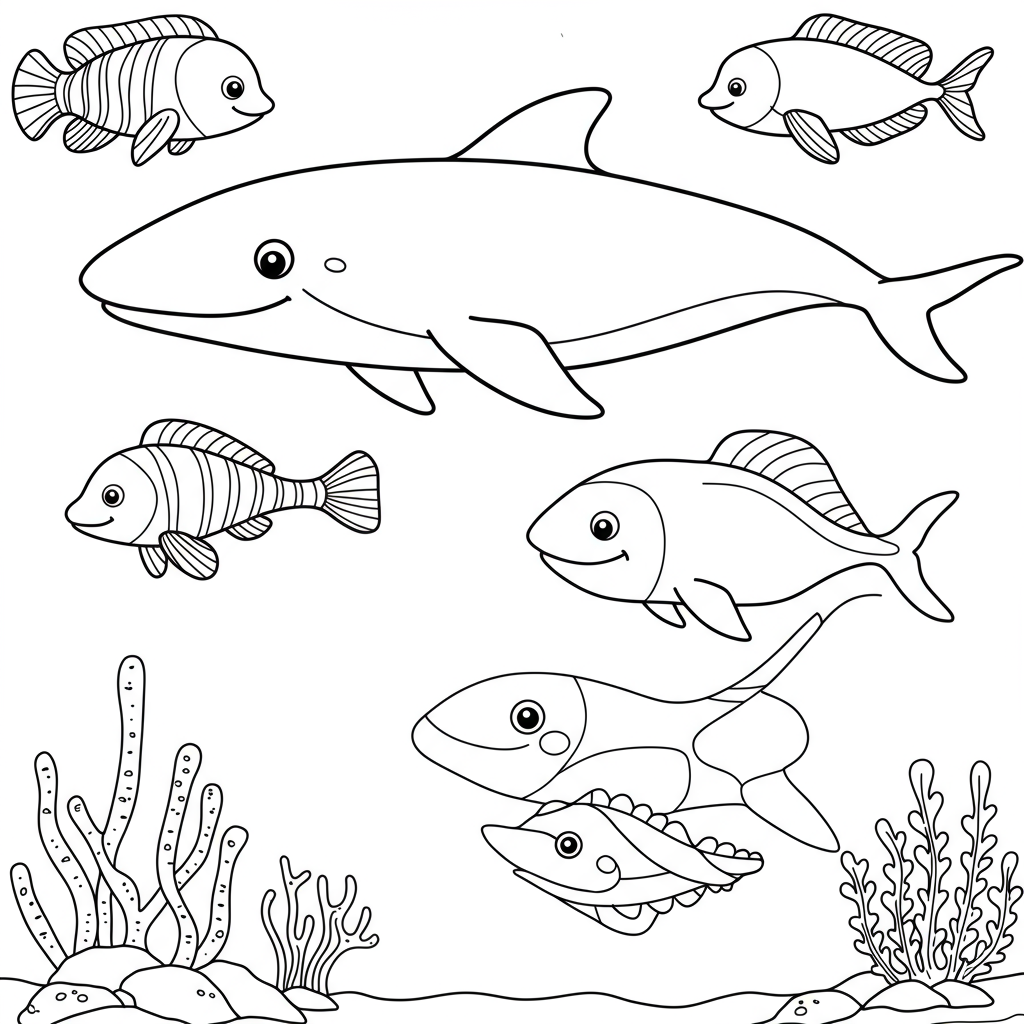
1) Friendly Reef Scene
Fill a reef with colorful fish, anemones, and swaying sea grasses. It’s perfect for mixing warm coral colors with cool ocean blues. Need lots of fishy choices? Cast a line into our Fish pages.
2) Shark Patrol
Sharks look amazing with cool gray-blue blends and a sharp white belly. Add motion lines around the tail for that powerful swish. Use bubbles and sunbeams to create depth around the silhouette.
3) Dolphin Dance
Leaping dolphins are great for practicing highlights. Leave thin white lines along the back and dorsal fin to show shiny wet skin. Try a sunset gradient sky for a wow moment.
4) Sea Turtle Journey
Segmented shells are a dream for shading. Alternate warm browns and cool greens, then add tiny dots with a gel pen for texture. Explore more in our dedicated Sea Turtle set.
5) School of Fish
Group fish in a curved V‑shape to suggest movement, and make the far fish slightly smaller and darker to add depth. For variety, check out Fish Coloring Pages.
6) Ocean Friends Mix
Mix turtles, dolphins, and reef life in one scene (hello, starfish!). For a general all‑in‑one set, start with Sea Animals.
10-Minute Quick Wins
- Bubbly Buddy: Color a smiling fish in bright yellow with orange fins; add pale blue bubble circles—find more in Fish.
- Turtle Tag: Shade a turtle shell with light olive, then dot tiny brown speckles—practice with Sea Turtles.
- Shark Silhouette: Fill the shark dark gray, then lay a soft gradient of blue behind it for “deep water.”
- Dolphin Splash: Use a white pencil or eraser to pull out highlights along the dolphin’s back; a couple of white gel pen dots = instant splash.
- Reef Rainbow: Choose three coral colors (peach, coral pink, magenta) and repeat them across the scene—start with Sea Animals.
Skill Builders & Ocean STEM Sparks
Ocean coloring secretly teaches biology and physics: fish anatomy (fins, gills, scales), turtle shell geometry, and how light filters underwater. Older kids can explore perspective (smaller, darker shapes look farther away) and refraction (wavy beams of light from the surface). Add a tiny compass or depth gauge to talk about directions and measurement.
- Symmetry: Mirror left/right fins and flippers.
- Texture: Cross‑hatch for scales; tiny dots for sandy sea floors.
- Depth Cues: Cooler, darker colors push objects “deeper.”
Ocean Color Combos & Water Effects
- Tropical Reef: Turquoise water + coral pink + sunny yellow fish.
- Open Ocean: Deep navy + steel blue + crisp white foam.
- Sea Turtle: Olive green + warm brown + cream highlights.
- Dolphin: Cool gray + light blue + silver accents.
- Shark: Slate gray + blue‑black back + white belly.
- Sunbeams: Drag a colorless blender (or very light pencil) downward in soft rays.
- Bubble Trails: Stagger small white circles behind tails and fins.
- Glassy Highlights: Leave thin white lines on curved backs and shells.
- Sandy Floors: Speckle tan and light brown dots; add a seashell shadow.
- Ripples: Wavy light-blue lines near the surface; fade darker below.
Materials & Printing Tips
- Paper: 120–160 gsm keeps markers from bleeding; place a scrap sheet underneath.
- Crayons: Great for broad water fills; layer darker blues at edges of animals.
- Colored Pencils: Ideal for scales, shell patterns, and tiny bubbles.
- Markers: Outline in pencil first, then fill—work from light to dark.
- Gel Pens: Use white for highlights and bubbles; metallics for shimmering fish.
- Printer Settings: “Fit to page,” borderless if available; print a test page first.
- Organization: Sort by theme: Sea Animals, Turtles, Fish.
Teacher/Parent Tip: Add a tiny “bubble meter” on each page and let kids color the bubbles as they finish sections—instant progress bar!
Host an Undersea Coloring Party
- Set the Scene: Blue tablecloth “water,” paper streamers as kelp, and bowls of goldfish crackers.
- Warm‑Up Page: Start with a simple friendly fish from Fish.
- Main Dive: Move to dolphins, sharks, or turtles—grab designs from Sea Animals and Sea Turtles.
- Snack “Reef‑uel”: Blue gelatin cups (ocean), fruit “coral,” and shell‑shaped cookies.
- Gallery Swim: Tape finished pages on a wall wave; award Sparkliest Bubbles, Best Reef, and Most Majestic Turtle.
FAQ
What ages are ocean animals coloring pages best for?
All ages! Younger kids thrive with simple shapes from Sea Animals, while older artists can explore detailed shells and scales in Turtles and Fish.
How do I make water look realistic?
Blend from light turquoise near the surface to deeper blue below. Add wavy sunbeams and a few bright highlights along animal backs. White gel pen bubbles = instant magic.
Any quick tips for shiny shells and fins?
Use a mid‑tone base, darken the edges, and leave a thin white curve for the highlight. Add a couple of bright dots near the highlight for a wet sparkle.
Where should I start if I want a mix of animals?
Begin with our Sea Animals category for a broad sampler, then “graduate” to the details in Sea Turtles and Fish.
Show us your splash! Share your reef scenes, shark silhouettes, and turtle journeys with #MyOceanColor for a chance to be featured.